
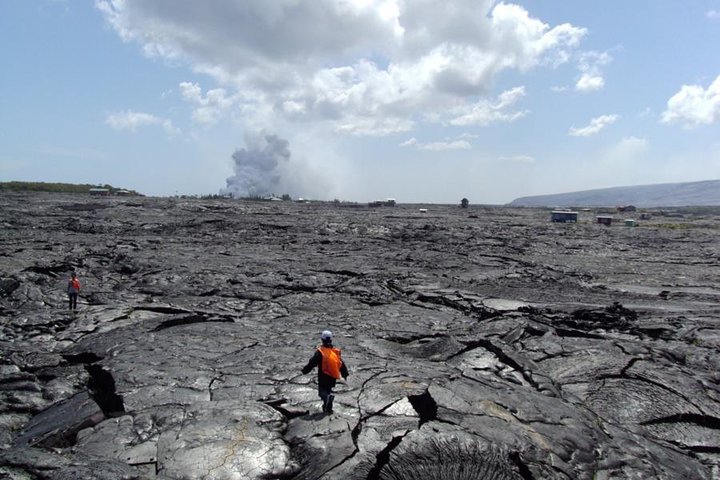
Walking on Fire: A Private Day in Hawai‘i Volcanoes National Park
A flexible, private deep-dive into the living geology and rainforest of Hawai‘i Volcanoes National Park
At first light the rainforest leans in, a green corridor breathing mist as you rise from Hilo’s coast toward Hawai‘i Volcanoes National Park. The road lifts through bands of rain, where hāpu‘u ferns unfurl like ancient scrolls and ‘ōhi‘a trees toss scarlet lehua blooms into the wind. Steam curls from the earth’s seams, daring you closer. This is a landscape that moves—quietly at times, suddenly at others—and your private day here gives you permission to adjust with it.
Trail Wisdom
Footwear that bites back
Sharp ‘a‘ā lava shreds flimsy soles. Wear sturdy, closed-toe hiking shoes with real tread to stay stable on uneven, abrasive rock.
Layers for summit chill
Kīlauea’s summit sits near 4,000 ft and can be 10–15°F cooler than Hilo with sudden showers. Pack a breathable rain shell and a light midlayer.
Hydrate early, often
There’s limited potable water once you leave the visitor areas. Carry at least 2 liters per person, more if descending to the drier coast.
Respect cultural sites
Stay on boardwalks at Pu‘uloa Petroglyphs and never remove rocks or artifacts. These places are living heritage, not souvenirs.
Local Knowledge
Hidden Gems
- •Waldron Ledge for wide, less-crowded caldera views
- •Birding pullouts along Crater Rim Drive for nēnē and ‘apapane sightings
Wildlife
Nēnē (Hawaiian goose), ‘Apapane (Hawaiian honeycreeper)
Conservation Note
Stay on marked trails to protect fragile ‘ōhi‘a and native understory. Volcanic soils are young and easily damaged; even a few footsteps can scar living crusts.
Established in 1916, Hawai‘i Volcanoes National Park protects the summits of Kīlauea and Mauna Loa and is recognized as a UNESCO World Heritage Site.
Seasonal Guide
spring
Best for: Mild temperatures, Lower crowds
Challenges: Intermittent rain, Changeable air quality (vog)
Spring’s shoulder season brings cooler summit temps and flexible conditions—great for longer walks without summer heat.
summer
Best for: Long daylight, Coastal exploring
Challenges: Higher visitation, Stronger sun exposure
Summer is busier and warmer. Start early for parking at popular stops and bring extra water and sun protection.
fall
Best for: Clearer skies after trades, Quieter trails
Challenges: Occasional storms, Shortening daylight
Fall often offers crisp viewing at the caldera and fewer crowds, with occasional Kona storms bringing heavy rain.
winter
Best for: Lush rainforest, Moody crater vistas
Challenges: Cool, wet weather, Gusty winds at overlooks
Winter is wettest and coolest at the summit; bring a warm layer and waterproof shell. Views can shift quickly with clouds.
Photographer's Notes
What to Bring
Lightweight waterproof rain jacketEssential
Sudden showers are common at the summit; a breathable shell keeps you dry without overheating.
Sturdy closed-toe hiking shoesEssential
Rough lava and wet paths require grippy soles and toe protection.
Sun hat and reef-safe sunscreenEssential
High UV and reflected light off lava can burn quickly even on cloudy days.
Daypack with 2L water and snacksEssential
There are long stretches without services; carry water, electrolytes, and fuel.
Common Questions
Will I see active lava on this tour?
Lava visibility is never guaranteed. Eruptions are dynamic and conditions change frequently; your guide checks Hawaiian Volcano Observatory updates and will adjust routes for the best safe viewing opportunities.
Is this tour suitable for kids?
Yes, with supervision. Many stops are short walks, but surfaces can be uneven and sharp. Keep children close at overlooks and steam vents.
What’s the weather like at the summit?
Kīlauea’s summit is cooler and wetter than Hilo. Expect temperatures in the 50s–70s°F with sudden showers and wind; dress in layers.
Are there restrooms and food available in the park?
Restrooms are available at major stops such as the Visitor Center and Volcano House. Food options are limited—bring snacks and water.
How much walking is involved?
It varies based on your interests. Most guests enjoy several short walks (0.25–2 miles each) on mixed terrain; the private format tailors distances to your comfort.
Do I need a permit or pass?
A standard Hawai‘i Volcanoes National Park entrance fee or pass is required for vehicle entry. Your tour operator will advise on what’s included.
What to Pack
Sturdy hiking shoes (lava is abrasive), lightweight rain shell (summit showers are frequent), 2L of water per person (limited refill spots), sun protection (UV is strong even under clouds).
Did You Know
Hawai‘i Volcanoes National Park is a UNESCO World Heritage Site and home to Kīlauea, one of the world’s most active volcanoes.
Quick Travel Tips
Start early to secure parking at popular overlooks; Check air quality and closures on the park website before you go; Fuel up in Hilo—services inside the park are limited; Respect cultural sites and follow all posted closures for safety.
Local Flavor
After your tour, head to Volcano Village for a wood-fired meal at Ohelo Cafe or sit fireside at Volcano House with crater views. Back in Hilo, grab mochi at Two Ladies Kitchen, sample shortbread at Big Island Candies, or toast the day with a local pint at Hilo Brewing Co. The Hilo Farmers Market (most vibrant on Wednesdays and Saturdays) is a quick taste of the island’s growers and plate lunch staples.
Logistics Snapshot
Closest airport: Hilo International (ITO). Main visitor hub: Kīlauea Visitor Center. Drive time: ~45 minutes from Hilo to the park entrance (~30 miles). Cell service: Spotty to none in several areas; download maps. Entry: National Park entrance fee or pass required; private tours may include entrance—confirm in advance.
Sustainability Note
This is a living volcanic ecosystem—stay on designated paths, pack out all trash, and avoid stepping on delicate new growth. Use reef-safe sunscreen to protect island waterways when showers flow seaward.
Continue Reading

Rainforest Two Ways: Zipline and ATV from San José to the Edge of Carara
From San José’s morning bustle to a jungle canopy and river-splashed ATV tracks, this day trip near Carara National Park delivers Costa Rica at two speeds. Fly through the trees, ford mountain streams, and finish with salt air in your lungs—all in one well-orchestrated adventure.
Jacó, Puntarenas Province

Edge of the Empire: Hiking Jiankou to Mutianyu on the Great Wall
Hike from the wild, unrestored stones of Jiankou to the polished watchtowers of Mutianyu on a five-hour traverse just outside Beijing. It’s a rare blend of solitude, story, and sweeping ridge views—where the Great Wall dares you upward and rewards you at every tower.
Beijing, Beijing